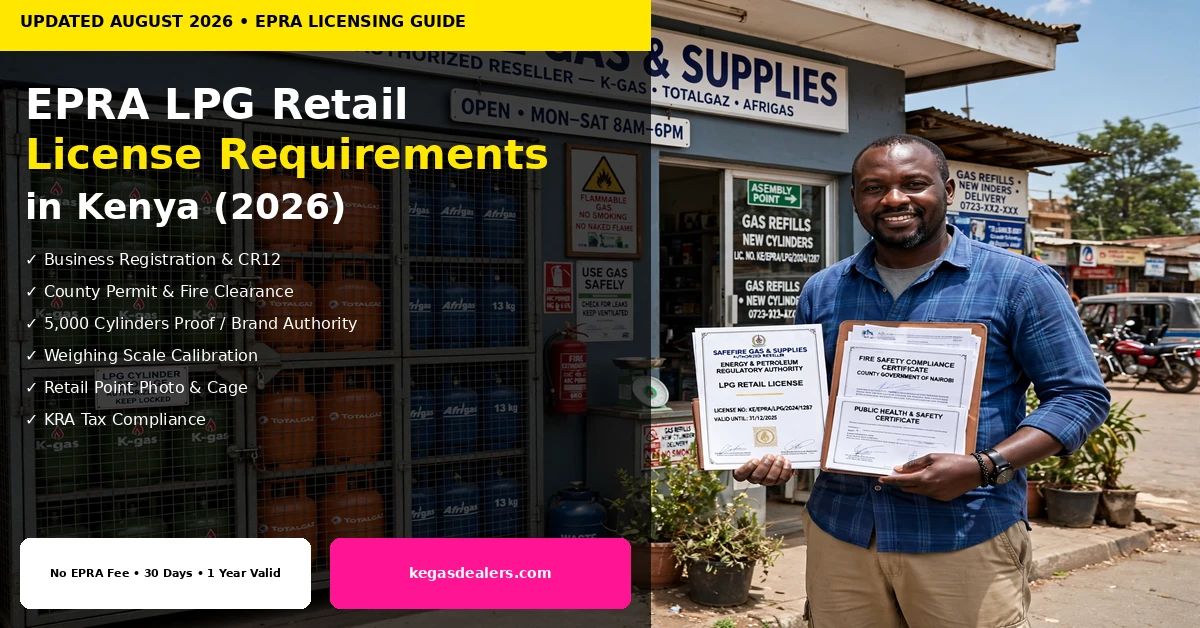
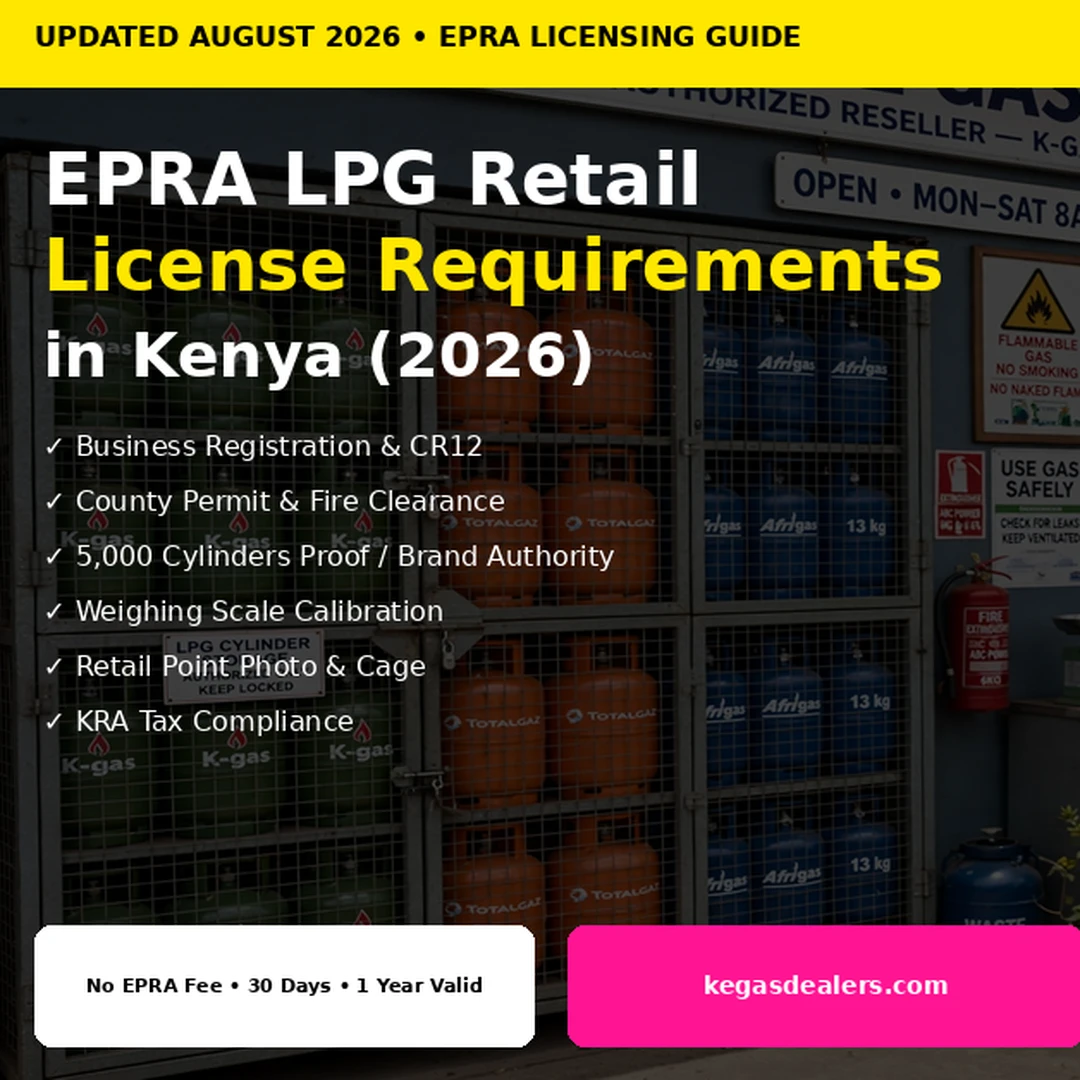
EPRA LPG Retail License Requirements in Kenya (2026)
Last reviewed: August 2026. This guide explains the documents, online application process, costs, and practical preparation required for an EPRA Licence for Retail of LPG in Cylinders.
To sell LPG cylinders legally in Kenya, most gas shops need an EPRA Licence for Retail of LPG in Cylinders. Before applying, prepare your business-registration documents, county approvals, proof of cylinder ownership or brand distributorship, weighing-scale calibration certificate, and a clear photograph of your retail point.
Applications are made online through the EPRA Licensing Portal. EPRA states that petroleum business licence applications are evaluated within 30 calendar days, the licence is valid for one year, and no fee is charged by EPRA for petroleum business licences.
Quick Answer: What You Need Before Applying
- Business Registration Certificate or Certificate of Incorporation
- CR12, where applicable, issued within the required validity period
- IDs or passports for directors and relevant work permits for foreign directors
- Valid KRA Tax Compliance Certificate
- Valid County Single Business Permit for the business premises
- Valid County Fire Clearance Certificate
- Proof of ownership of at least 5,000 LPG cylinders or written brand distributorship authority
- Valid weighing-scale calibration certificate from the Department of Weights and Measures
- A colour photograph showing the retail point, cylinder holding cage, and neighbouring premises
EPRA LPG Retail Licence at a Glance
| Licence category | Retail of LPG in Cylinders |
|---|---|
| Application method | Online through the EPRA Licensing Portal |
| EPRA licence fee | No fee charged for petroleum business licences by EPRA |
| Processing period | Applications are evaluated within 30 calendar days from receipt |
| Licence validity | One year from the date of issue |
| Best suited for | Gas shops, supermarkets, hardware stores, and businesses retailing LPG cylinders |
What Is an EPRA LPG Retail Licence?
An EPRA LPG retail licence authorises a business to conduct the licensed activity of retailing LPG in cylinders. It is the appropriate starting category for many businesses selling branded, pre-filled LPG cylinders to end users.
If you are still planning your investment, read our detailed guide on how much capital you need to start a gas business in Kenya. You can also review our step-by-step article on how to start a profitable cooking gas business in Kenya.
Which EPRA LPG Licence Do You Need?
| Business type | Likely licence category | Typical example |
|---|---|---|
| Retail sale of LPG cylinders | Retail of LPG in Cylinders | Estate gas shop, supermarket, or hardware store selling LPG cylinders |
| Wholesale, filling, distribution, transport, or bulk handling | Different petroleum/LPG licence category may apply | Depot, cylinder brand owner, filling plant, bulk transporter, or large distributor |
Important: This page focuses on the EPRA category for Retail of LPG in Cylinders. Confirm the correct licence class with EPRA if your business will fill cylinders, transport bulk LPG, operate a depot, or conduct another specialised activity.
EPRA LPG Retail Licence Requirements Checklist
Prepare the required documents before starting your online application. Missing, expired, unclear, or inconsistent documents can delay assessment of your application.
1. Business Registration Documents
- Certificate of Incorporation or Business Registration Certificate
- CR12 from the Registrar of Companies, where applicable; it should not be older than one year when submitted
- Legible IDs or passports for all company directors
- Class G or D work permits for foreign directors working in Kenya, where applicable
- Notarised declaration for foreign directors who are not resident in Kenya, where applicable
- Valid KRA Tax Compliance Certificate for the applicant
2. County and Premises Documents
- Valid Single Business Permit for the premises from the relevant County Government
- Valid Fire Clearance Certificate for the premises from the relevant County Government
- Colour photograph of the retail point clearly showing the cylinder holding cage and neighbouring premises
3. LPG Supply and Measurement Requirements
- Proof of ownership of at least 5,000 LPG cylinders in the listed permitted sizes, or written authority confirming you are a distributor for a particular brand from a licensed LPG cylinder brand owner
- Valid certificate of weighing-scale calibration from the Department of Weights and Measures
Prepare Your Retail Point for Compliance
Need equipment for a professional LPG retail outlet? KegasDealers supplies LPG cylinders, weighing scales, safety signage, and related gas-business accessories. Confirm your exact compliance needs against EPRA’s current requirements before purchasing.
Browse Gas Business AccessoriesHow to Apply for an EPRA LPG Licence Online
EPRA requires applicants to apply through its online licensing portal. Scan your documents clearly, ensure they are current, and keep your business details consistent across all files.
Step 1: Create an EPRA Portal Account
- Visit the official EPRA Licensing Portal.
- Select Create Account or register as a new user.
- Use an active email address and complete account verification when EPRA sends your access credentials.
Step 2: Start a New Licence Application
- Log in to your EPRA portal account.
- Select License Management, then choose New Licence Application.
- Select the category Retail of LPG in Cylinders.
- Read and accept the licence conditions, then proceed with registration.
Step 3: Complete the Form and Upload Documents
- Fill in the business, director, contact, and premises details accurately.
- Upload every required document for the selected licence category.
- Check that names, company details, permit details, and addresses match across your application documents.
- Save your progress and review the application before submission.
Step 4: Submit Your Application
- Confirm that no required section or document upload has been left blank.
- Submit the completed application through the portal.
- Monitor your portal account and registered email for EPRA communication, requests for clarification, approval, or deferral.
Starting a New Gas Business? We Can Help With Your EPRA Licence
Starting a new LPG business involves more than buying stock. You must also prepare the correct documents, organise your business premises, understand the application steps, and submit a complete EPRA licence application.
KegasDealers can help qualifying new gas-business owners with the EPRA licence application process at our cost when they buy a minimum of 10 gas cylinders from us. This offer is designed to help serious entrepreneurs start with genuine cylinder stock while receiving practical guidance on the EPRA retail-licence process.
We can guide you on the application checklist, documentation preparation, LPG retail setup, cylinder sourcing, safety accessories, and the next steps required before you submit your application. EPRA remains the independent regulator that reviews and approves or defers every licence application.
Before purchasing, compare our current gas cylinder wholesale prices in Kenya and explore our wholesale gas cylinder supply options.
WhatsApp Us for EPRA Licence Support Request a Cylinder Wholesale QuoteOffer terms: EPRA licence-application support is available to qualifying customers purchasing a minimum of 10 gas cylinders from KegasDealers. The customer remains responsible for all official documents, county approvals, premises compliance, and any third-party or county charges. EPRA independently assesses and decides all licence applications; approval cannot be guaranteed.
EPRA Licence Cost, Processing Time and Validity
| Question | Official EPRA position |
|---|---|
| Does EPRA charge a petroleum business licence fee? | No. EPRA states that no fees are charged for petroleum business licences. |
| How long does application assessment take? | Applications are evaluated within 30 calendar days from the date of receipt. |
| How long is the licence valid? | One year from the date of issue. |
Although EPRA does not charge a petroleum business licence fee, you should budget separately for business registration, county permits, fire-clearance requirements, premises setup, professional services, equipment, stock, and other operating costs.
For a clearer view of start-up capital, read how to start a cooking gas retail business in Kenya with KSh 50,000. If you are evaluating potential returns, see our guide: Is a cooking gas business profitable in Kenya?
Renewing an EPRA LPG Retail Licence
Start your renewal process early so you can keep your documents current. EPRA’s published renewal requirements include valid business and county documents, director identification documents, a current tax-compliance certificate, proof of cylinder ownership or authorised distributorship, fire clearance, and weighing-scale calibration certification.
Check the EPRA portal and the latest official requirements before submitting a renewal application, as regulatory requirements may be updated.
Frequently Asked Questions
Is an EPRA LPG retail licence free?
EPRA states that no fees are charged for petroleum business licences. However, this does not mean starting an LPG business is cost-free: you may still incur county permit, fire-clearance, premises, equipment, stock, and other compliance costs.
How long does EPRA take to process an LPG retail licence?
EPRA states that licence applications are evaluated within a maximum of 30 calendar days from the date of receipt. If an application is deferred, EPRA indicates that the applicant will be notified of the specific reasons.
How long is an EPRA LPG retail licence valid?
An EPRA licence for Retail of LPG in Cylinders is valid for one year from the date it is issued.
Where do I apply for an EPRA LPG licence?
Apply through the official EPRA Licensing Portal. Register as a user, select the appropriate licence category, complete the application, attach the required documents, and submit it online.
Can KegasDealers help me apply for an EPRA licence?
Yes. KegasDealers can provide practical EPRA licence-application support to qualifying new gas-business customers who purchase a minimum of 10 gas cylinders from us. Contact us on WhatsApp to discuss the offer, available cylinders, wholesale pricing, and the documents you need to prepare.
Chat With KegasDealers on WhatsApp
Can I refill or decant LPG cylinders in my retail shop?
Operate only within the activities authorised by your specific EPRA licence. If you intend to fill, decant, transport bulk LPG, or undertake any activity beyond retailing LPG cylinders, confirm the applicable licence category and safety requirements directly with EPRA before operating.
Start Your LPG Retail Business With the Right Stock
Source LPG Cylinders and Business Supplies From KegasDealers
KegasDealers supplies wholesale LPG cylinders, refills, regulators, burners, safety accessories, and related gas-business supplies. We can help new dealers choose suitable stock for their location, customer base, and budget.
Browse K-Gas empty cylinders wholesale, check our 6kg gas cylinder wholesale guide, or review the latest gas cylinder prices in Kenya before placing an order.
Request a Wholesale Quote Get a Quote on WhatsAppDisclaimer: This is an independent guide prepared by KegasDealers for general information. Licensing requirements and portal processes can change. Always confirm current requirements directly with EPRA before applying, investing, or operating.
Pingback: How To Become A Gas Dealer In Kenya (2026) | LPG Gas Business Guide