How to Start a Gas Refill Business in Kenya With KSh 50,000
Last updated: September 2026
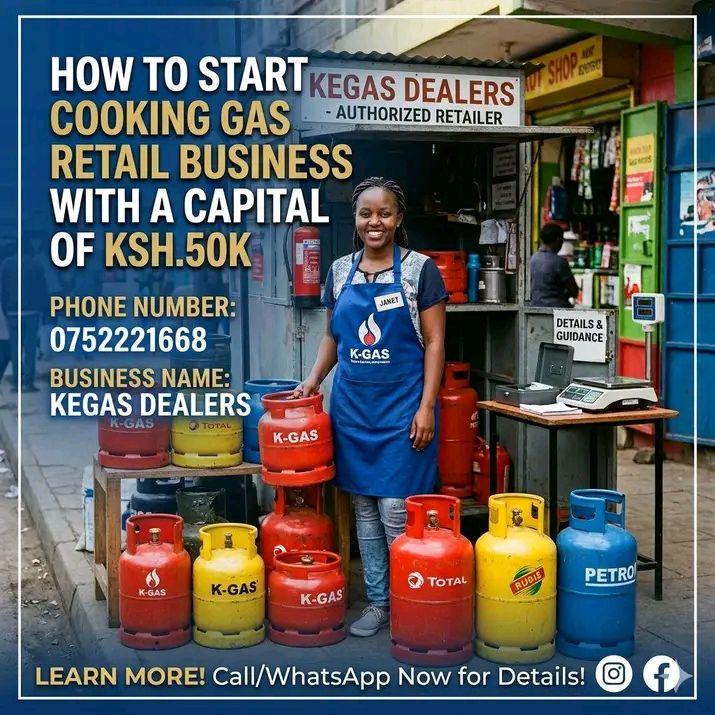
Starting a gas refill business in Kenya with KSh 50,000 may be possible as a lean business-starting capital target, but KSh 50,000 is not a universal minimum cost for opening a fully compliant LPG retail business.
Your actual startup capital depends on your location, premises, LPG cylinder stock, supplier arrangements, county requirements, safety equipment, licensing and compliance requirements, transport, branding and working capital.
This guide explains how to start a gas refill business in Kenya, how to plan a KSh 50,000 starting budget, what you need before opening, how to choose LPG stock, how to approach licensing and compliance, and how to build a simple gas business plan.
Quick answer: Can you start a gas business with KSh 50,000?
KSh 50,000 can be used as a lean starting-capital target for planning a small LPG retail business, particularly where premises and other startup costs are already manageable. However, it may not be enough to cover every cost of a fully compliant launch.
Do not spend the entire KSh 50,000 on cylinders. Your budget should also account for premises, licensing and compliance, safety requirements, delivery, marketing and working capital.
Key Takeaways
- KSh 50,000 is a starting-capital target, not a guaranteed minimum.
- Your actual startup cost depends on the premises, location, stock, approvals, safety requirements and operating model.
- A new retailer should research local demand before purchasing LPG cylinders and accessories.
- Do not assume that buying cylinders alone makes a gas business compliant.
- Verify the current LPG licensing, premises and safety requirements before signing a lease or buying substantial stock.
- Use an authorised LPG supply chain and follow applicable brand-authorisation requirements.
- Keep working capital available instead of committing all your money to opening inventory.
- Profitability depends on sales volume, purchase costs, selling prices and operating expenses. See our detailed cooking gas business profitability guide.
Can You Start a Gas Refill Business in Kenya With KSh 50,000?
Yes, KSh 50,000 can be a useful starting-capital target for a lean LPG retail business, but it should not be treated as a universal startup requirement.
The amount you need depends heavily on where you operate and what your business already has available. A retailer who already has suitable premises may require less additional capital than someone who must pay rent, a deposit, signage, safety equipment and other startup expenses before purchasing stock.
The biggest mistake is to assume that the entire KSh 50,000 should be converted into LPG inventory.
A practical startup plan should divide available capital between:
- Initial LPG cylinders and complete sets
- LPG refill working stock where applicable
- Premises and related costs
- Licensing and compliance requirements
- Fire and safety equipment
- Business identification and signage
- Transport and delivery
- Phone and customer communication
- Working capital for replenishing fast-moving stock
Important: Retail LPG is a regulated activity. Before opening, confirm the licence category, premises requirements, county approvals and other applicable requirements for your business model.
How Much Money Do You Need to Start a Gas Business in Kenya?
There is no single startup figure that applies to every LPG retailer in Kenya. Your required capital should be calculated from the actual costs of your proposed location and business model.
Instead of asking only, “Can I start a gas business with KSh 50,000?”, calculate the following:
| Startup Cost Area | What to Budget For |
|---|---|
| LPG stock | 6kg, 13kg and other cylinder sizes demanded in your area |
| Complete gas sets | Cylinder, regulator, hose and compatible accessories where applicable |
| Premises | Rent, deposit and preparation of a suitable business location |
| Licensing and compliance | Applicable county, regulatory and business approvals |
| Safety equipment | Fire-safety and other equipment required for the premises and business model |
| Weighing equipment | Suitable equipment and calibration where applicable |
| Branding | Business signage, phone number display and basic marketing materials |
| Transport | Supplier collection, delivery and local logistics |
| Working capital | Cash reserved for stock replenishment and day-to-day expenses |
Do not use figures from an old price list as permanent startup costs. LPG cylinder prices, refill costs, transport and other business expenses can change. Obtain current supplier quotations before committing your capital.
Example KSh 50,000 Opening-Stock Plan
The following is an illustrative stock-planning example, not a current quotation or a statement of the minimum amount required to open an LPG business.
| Product | Illustrative Quantity | Illustrative Unit Cost | Illustrative Total |
|---|---|---|---|
| 6kg complete gas sets | 10 | KSh 2,800 | KSh 28,000 |
| 13kg complete gas sets | 3 | KSh 5,400 | KSh 16,200 |
| Illustrative opening stock | KSh 44,200 | ||
| Remaining capital | KSh 5,800 |
This example demonstrates an important point: if KSh 50,000 is your total available capital, spending KSh 44,200 on opening stock leaves only KSh 5,800 for everything else.
That remaining amount may be insufficient for rent, deposits, compliance, safety equipment, transport, marketing and working capital. You may therefore need to reduce the initial stock quantity, secure additional capital, or start with premises and equipment that are already available to you.
What Do You Need to Start a Gas Refill Business?
A gas retail business requires more than LPG cylinders. Before opening, prepare a checklist covering the premises, approvals, stock, supplier arrangements, safety and daily operations.
Basic Gas Business Startup Checklist
- A suitable and lawful business premises
- Applicable county business approvals and permits
- The applicable LPG retail licence or regulatory approval
- Compliance with premises and LPG storage requirements
- Fire-safety and emergency equipment applicable to the premises
- An authorised LPG supply arrangement
- Appropriate cylinder stock based on local demand
- Suitable weighing equipment and calibration where applicable
- Clear business signage and customer contact details
- A stock and sales record system
- Working capital for replenishment and operating expenses
- A safe and lawful method of transporting LPG cylinders
For a more detailed breakdown, see our guide to LPG gas business requirements and licensing in Kenya.
How to Start a Gas Refill Business in Kenya: Step by Step
1. Choose Your LPG Business Model
First decide exactly what type of gas business you want to operate.
A small entrepreneur may focus on LPG cylinder retail, filled-cylinder sales, complete gas sets, accessories, local delivery or a combination of these activities.
Do not assume that a retailer is authorised to physically refill or decant LPG cylinders. Do not decant, transfer or refill LPG cylinders unless you have the separate approvals and facilities required for that activity.
For a typical small shop, the practical focus is usually retailing LPG cylinders and related products through an authorised supply chain.
2. Research Local Demand and Competition
Research your target area before spending your KSh 50,000.
Visit the neighbourhood at different times and identify:
- How many LPG retailers already operate nearby
- Which cylinder sizes customers commonly use
- Which LPG brands are available
- Typical refill and complete-set prices
- Whether competitors offer delivery
- Products customers frequently ask for
- Competitor opening hours and customer-service practices
- Whether the area has enough households and businesses using LPG
Ask potential customers which brands and cylinder sizes they already use. This can prevent you from putting scarce startup capital into slow-moving stock.
3. Choose a Suitable Gas Business Location
A cheap shop is not automatically a good LPG retail location.
Look for a location that combines customer demand, accessibility, security and suitability for the applicable LPG storage and safety requirements.
Before paying a deposit, consider:
- Residential population and household density
- Customer accessibility
- Road and delivery access
- Security
- Rent and deposit
- Nearby competitors
- Suitability of the premises for LPG retail
- Applicable county and regulatory requirements
Do not sign a long-term lease before checking whether the premises can satisfy the requirements applicable to your intended LPG business.
4. Plan Your KSh 50,000 Startup Capital
Separate your money into inventory capital and operating capital.
Your inventory budget should cover the products customers actually demand. Your operating reserve should cover expenses that continue even when sales are slow.
A simple approach is:
- Calculate your premises-related costs.
- Identify the approvals and compliance requirements applicable to your business.
- Obtain current supplier prices.
- Research the fastest-moving cylinder sizes in your area.
- Set aside money for safety requirements.
- Reserve cash for transport and stock replenishment.
- Only then determine how much of the remaining capital can be invested in opening inventory.
5. Check LPG Licensing, Compliance and Safety Requirements
Gas retail is a regulated business. The exact requirements depend on the nature of the business, premises and applicable Kenyan regulations.
Before opening, verify the current requirements with the relevant authorities, including:
- The applicable LPG retail licence category
- County business permits and approvals
- Premises and LPG storage requirements
- Fire-safety requirements
- Weighing-scale requirements where applicable
- Supplier and LPG brand-authorisation requirements
- Requirements for cylinder handling, storage and records
EPRA publishes petroleum licence application guides and LPG regulatory information. Review the current requirements before committing money to premises or stock.
View EPRA petroleum licence application guides
View EPRA Licence for Retail of LPG in Cylinders
You can also read our detailed LPG gas business requirements and licensing guide.
Important compliance note
Licences, permits and approvals are issued by the relevant government authorities after their review. KeGasDealers may support qualifying customers with application guidance and supplier or brand documentation where applicable, but approval is not guaranteed.
6. Find an Authorised LPG Supplier
Do not choose a supplier solely because the price appears cheap.
Your supplier should provide genuine LPG products through a lawful supply chain and appropriate documentation for the products and brands being supplied.
Ask about:
- Current wholesale prices
- Available cylinder brands and sizes
- Minimum order quantities
- Complete-set options
- Delivery availability
- Brand-authorisation documentation where applicable
- Product availability and replenishment times
- Payment terms for established customers
For current LPG cylinder and complete-set availability, contact KeGasDealers before finalising your stock plan.
7. Choose the Right Cylinder Stock Mix
Do not automatically buy equal quantities of every cylinder size.
Start with the products that customers in your area actually request. 6kg and 13kg LPG cylinders are important retail categories in Kenya, but local demand varies.
- Start with manageable quantities.
- Track which cylinder sizes sell fastest.
- Reorder based on actual sales data.
- Avoid excessive slow-moving stock.
- Stock compatible accessories that customers regularly request.
- Keep enough cash available for fast-moving stock replenishment.
See our Kenya wholesale gas cylinder price guide for current product and pricing information.
8. Set Your Prices Using Current Costs
Your retail price should be based on your actual purchase cost, operating expenses, market conditions and the margin required to keep the business sustainable.
Do not copy another retailer’s selling price without knowing their costs.
A simple gross-profit calculation is:
Gross profit per product = Selling price − Product purchase cost
Net profit = Gross profit − Operating expenses
Operating expenses can include rent, wages, transport, fuel, payment charges, marketing, licences, maintenance, taxes and other business costs.
9. Set Up Sales, Customer Service and Delivery
Make it easy for customers to contact you and know what you sell.
- Display your business name and telephone number clearly.
- Respond promptly to calls and WhatsApp enquiries.
- Give customers clear prices.
- Keep popular products available.
- Record every sale and stock movement.
- Offer delivery only when it can be done safely and lawfully.
- Build repeat customers through reliable service rather than competing only on price.
10. Track Sales, Stock and Cash Flow
From the first day, record:
- Opening stock
- Stock purchased
- Stock sold
- Sales revenue
- Purchase costs
- Delivery and transport expenses
- Daily cash balance
- Customer demand by cylinder size
- Outstanding payments where applicable
This information will tell you which products are actually making money and which products are tying up your capital.
Gas Business Requirements in Kenya
One of the most important questions new entrepreneurs ask is: “What are the requirements to start a gas business in Kenya?”
The answer depends on the specific LPG activity and premises. Requirements can include business registration, county approvals, LPG licensing, suitable premises, fire-safety compliance, weighing equipment and calibration where applicable, and an authorised LPG supply arrangement.
Because Kenyan petroleum regulations and application requirements can change, verify the current requirements before opening.
Read the full LPG gas business requirements and licensing guide.
Simple Gas Business Plan for a KSh 50,000 Startup
A simple gas business plan does not need to be complicated. It should explain how you will obtain customers, stock products, control costs and generate enough sales to keep replenishing inventory.
| Business Plan Area | What to Define |
|---|---|
| Business model | LPG retail, complete sets, accessories, delivery or combination |
| Target customers | Households, landlords, small businesses and other local LPG users |
| Location | Target neighbourhood, estate, market centre or town |
| Products | 6kg, 13kg and other locally demanded LPG products |
| Supplier | Authorised and reliable LPG supply source |
| Pricing | Current purchase cost plus an appropriate margin and operating-cost allowance |
| Marketing | Signage, referrals, local visibility, phone and WhatsApp enquiries |
| Delivery | Safe and lawful local delivery arrangements where offered |
| Cash flow | Reserve enough money to replenish fast-moving stock |
| Growth | Increase stock based on proven customer demand rather than speculation |
Is a Gas Refill Business Profitable in Kenya?
A cooking gas business can be profitable, but profitability is not guaranteed. Your result depends on sales volume, wholesale purchase prices, selling prices, location, rent, transport, staff costs, payment charges, taxes, licensing and other operating expenses.
For example, two retailers selling the same number of cylinders can have very different net profits if one pays substantially more rent or delivery costs.
Rather than relying on a single profit figure, calculate your own margin using current supplier prices and your expected sales volume.
For detailed calculations covering 6kg and 13kg refill margins, daily sales scenarios, complete-set margins and other profitability considerations, see our dedicated guide:
Is Cooking Gas Business Profitable in Kenya? Complete LPG Business Profit Guide
Remember the difference between gross profit and net profit
A product can have a healthy gross margin while the business still makes little net profit after rent, wages, transport, fuel, marketing, payment charges, taxes, permits and other operating expenses.
Common Mistakes When Starting a Gas Business
1. Spending All Your Capital on Stock
Buying more cylinders than you can sell quickly can leave you without cash for operating expenses or replenishment.
2. Choosing a Location Only Because Rent Is Cheap
Low rent does not compensate for poor customer demand or premises that are unsuitable for the intended LPG business.
3. Ignoring Compliance Until After Opening
Check the applicable regulatory and county requirements before signing a lease or purchasing substantial stock.
4. Buying Products Without Researching Demand
Stock should follow local customer demand. Track which cylinder sizes, brands and accessories sell most frequently.
5. Competing Only on Price
A sustainable retailer also competes through availability, convenience, safe handling, customer service and reliable delivery.
6. Confusing Gross Profit With Net Profit
Always deduct operating costs before deciding whether the business is actually profitable.
7. Failing to Track Stock
Without accurate stock records, it becomes difficult to identify losses, slow-moving products and actual margins.
Where Can You Buy LPG Cylinders for a Gas Business?
New retailers should source LPG cylinders and related products through a reliable, authorised supply chain.
Before purchasing, confirm:
- Current wholesale price
- Available brands
- Cylinder sizes
- Minimum order quantity
- Complete-set options
- Delivery arrangements
- Applicable brand-authorisation requirements
- Product availability
KeGasDealers supplies LPG cylinders, complete gas sets and selected accessories to qualifying gas-business customers.
View wholesale gas cylinder prices in Kenya
Contact KeGasDealers for current wholesale prices, stock availability and gas-business support
Frequently Asked Questions
Can I start a gas refill business with KSh 50,000 in Kenya?
KSh 50,000 can be used as a lean starting-capital target for a small LPG retail business, but it is not a universal minimum. Your actual capital requirement depends on premises, stock, licensing, safety, transport and working-capital costs.
How much money do I need to start a gas refill business in Kenya?
The amount depends on your location, premises, LPG stock, approvals, safety requirements, supplier arrangements, transport and working capital. KSh 50,000 may support a lean starting plan in some circumstances, but it may not cover every cost of a fully compliant launch.
What do I need to start a gas refill business in Kenya?
You generally need suitable premises, applicable business and LPG approvals, safety and compliance arrangements, an authorised LPG supply chain, appropriate stock, customer-service systems and working capital. Requirements vary according to the business model and premises.
Is a cooking gas business profitable in Kenya?
A cooking gas business can be profitable, but profit is not guaranteed. Results depend on sales volume, wholesale purchase costs, selling prices, rent, transport, staffing, licensing, taxes and other operating expenses. See our detailed cooking gas business profitability guide.
What are the requirements for a gas business in Kenya?
Requirements depend on the LPG activity, premises and applicable regulations. They can include county approvals, the applicable LPG licence, suitable premises, fire-safety compliance, weighing equipment where applicable and an authorised LPG supply arrangement. Confirm current requirements before opening.
How do I start a gas refill business in Kenya?
Start by choosing your LPG business model, researching local demand, selecting suitable premises, calculating your startup capital, checking licensing and compliance requirements, finding an authorised supplier, purchasing demand-based stock, setting prices and establishing sales, delivery and stock-control systems.
How much can a gas refill business make?
There is no guaranteed daily or monthly income. Your potential gross profit depends on the number of cylinders sold and the margin per product, while net profit depends on operating expenses. Use current supplier costs and your expected sales volume to calculate your own figures.
What LPG cylinder sizes should a new gas retailer stock?
Start with cylinder sizes that customers in your target area already use. 6kg and 13kg cylinders are important retail categories in Kenya, but demand varies by location. Track actual sales before expanding your stock range.
How do I find an LPG supplier for my gas business?
Compare authorised suppliers based on current wholesale prices, available brands and sizes, minimum order quantities, delivery arrangements, documentation and product availability. Avoid purchasing from an unverified supply chain.
Can KeGasDealers help with gas business licensing?
KeGasDealers supports qualifying new gas-business customers with licensing and compliance application guidance and relevant supplier or brand documentation where applicable. Final licences, permits and approvals are issued by the relevant government authorities after their review.
Start Planning Your KSh 50,000 Gas Business
KSh 50,000 can be a useful starting point for planning a lean LPG retail business, but the right strategy is to validate your location, calculate your real startup costs, confirm compliance requirements and protect your working capital before buying stock.
Do not build your business plan around a single assumed profit figure. Use current wholesale prices, local selling prices, expected sales volume and actual operating expenses to calculate your own expected margins.
For current LPG cylinder availability, complete gas sets, wholesale pricing and business support:
Contact KeGasDealers for current LPG wholesale prices, stock availability and gas-business support →